From Sunday 23 August to Saturday 29 August 2026, we celebrate Speech Pathology Awareness Week, recognising the important role Speech Pathologists play in helping people communicate, connect, and participate in everyday life.
This year’s theme, Communication for Everyone, highlights the belief that everyone deserves the opportunity to communicate in the way that works best for them. Whether through spoken language, sign language, Augmentative and Alternative Communication (AAC), gestures, or other forms of communication, every voice matters.
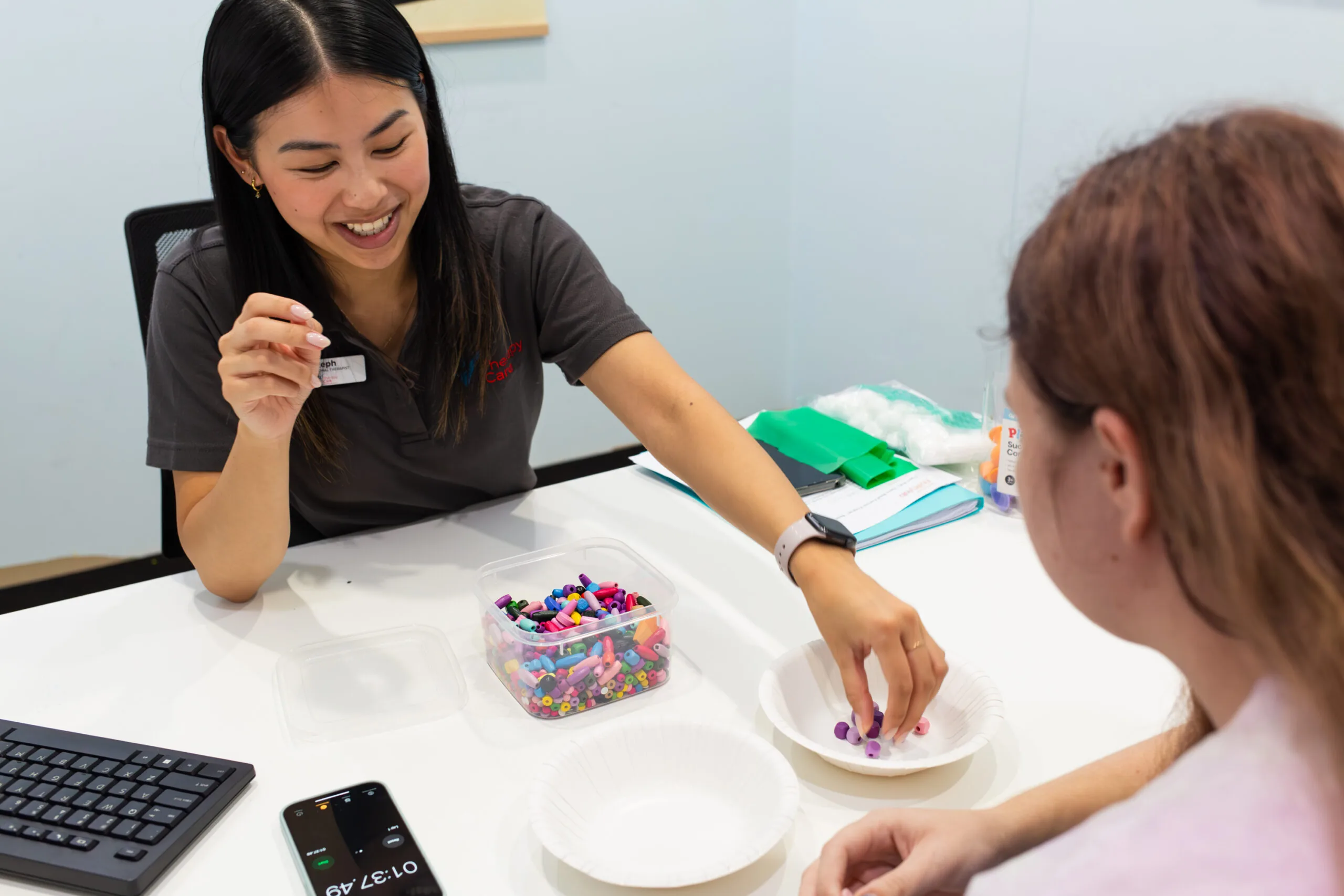
At Therapy Care, our Speech Pathologists and Allied Health Assistants support children and adults with a wide range of communication and swallowing needs. Working collaboratively with participants and their families, our team provides personalised, evidence-based therapy that helps individuals build confidence, independence, and meaningful communication skills.
Speech pathology supports much more than speech. Our team works with participants to develop:
Communication is a fundamental part of everyday life. It helps us express our thoughts and feelings, build relationships, learn, work, advocate for ourselves, and participate in our communities. That’s why access to quality speech pathology can make such a meaningful difference.
As part of Speech Pathology Awareness Week, we sat down with Taylah and Bronte to hear about their journeys into speech pathology, what they love most about supporting participants, and the meaningful impact communication has on everyday life.
Meet Taylah, Allied Health Assistant (Speech)
What inspired you to pursue a career in speech pathology?
I wanted to work in speech pathology because I’m passionate about helping people with a range of communication difficulties improve their ability to communicate effectively. Whether it’s speech, language, voice, social communication, or fluency, everyone deserves to have a voice and be heard. I love that this career allows me to help people find their voice.
What has been one of your most rewarding experiences?
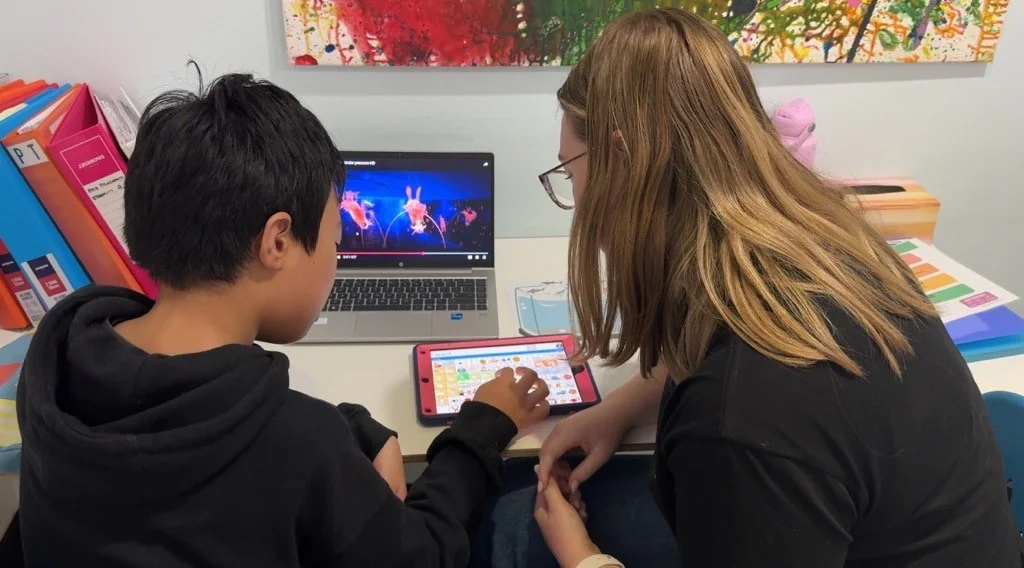
Seeing participants make progress towards their communication goals and hearing positive feedback from families is incredibly rewarding. This can be anything from a young child saying their first words to an adult participant confidently using an AAC system to communicate with their support workers.
How do you support participants to achieve their communication goals?
Communication goals are developed in collaboration with participants and their families to ensure therapy is personalised to their individual needs. I use evidence-based approaches while making sessions fun, meaningful, and engaging, helping participants enjoy therapy while building their skills and confidence.
What’s one common misconception about speech pathology?
Many people think speech pathology sessions, particularly with young children, are “just playing games.” In reality, speech pathologists use play-based therapy to deliver evidence-based strategies in a way that keeps children engaged while supporting their communication goals.
What’s one thing you wish more people knew about communication?
Communication is something many of us take for granted, but not being able to express your wants, needs, ideas, opinions, or feelings can have a significant impact on everyday life. That’s what makes speech pathology so rewarding. We help participants build the confidence and independence to communicate in ways that are meaningful to them.
Meet our Speech Pathologist, Bronte
What inspired you to become a speech pathologist?
I’ve always loved working with children and wanted a career where I could make a meaningful difference in people’s lives. As I learnt more about speech pathology, I realised just how broad the profession is and that it extends far beyond paediatrics to supporting people of all ages. I love helping people find their voice, build confidence, and achieve goals that improve their everyday lives.
What is one of the most rewarding moments you’ve experienced as a speech pathologist?
One of my most rewarding moments was helping a 10-year-old participant articulate and say his name clearly for the first time. Seeing the pride and excitement on his and his mum’s face, and knowing how important that moment was for his confidence and identity, is something I’ll never forget.
How do you help participants achieve their communication goals?
I believe the best outcomes come from working collaboratively with participants, their families, and their wider support team. Every person’s communication needs are different, so I focus on understanding what is meaningful and functional for them. Whether that’s supporting speech, language, social communication, or introducing AAC, I aim to provide a range of evidence-based options that help participants communicate as independently and confidently as possible.
What’s one misconception people have about speech pathology?
A common misconception is that using AAC (Augmentative and Alternative Communication) replaces or discourages speech. In reality, AAC supports communication and often helps people develop their language and speech skills. The goal is always to give someone the best way to communicate, not to take speech away.
What’s one thing you wish more people knew about communication and the impact it has on everyday life?
Communication is much more than talking. It’s how we build relationships, express our thoughts and feelings, make choices, learn, advocate for ourselves, and participate in our communities. When someone has difficulty communicating, it can affect every aspect of their daily life. Supporting communication isn’t just about improving speech, it’s about helping people connect with others and participate fully in the things that matter most to them.
Thank you to our incredible Speech team for the care, knowledge, and dedication you bring to participants every day. Happy Speech Pathology Awareness Week! 💙